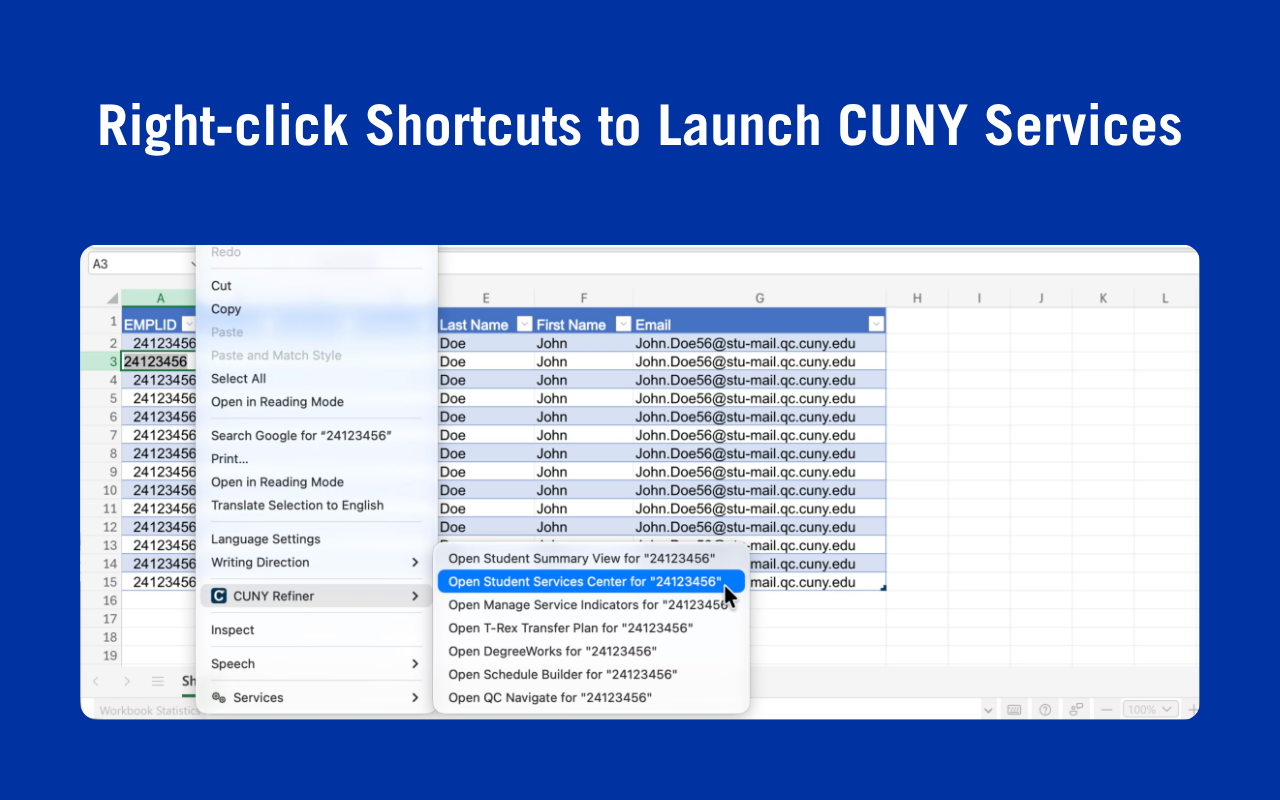
CUNY Refiner is a "manifest-v3" browser extension designed to enhance the user experience and
productivity of various CUNY platforms. Developed with GitHub Copilot / Codex and agentic coding
principles, this tool provides a suite of features aimed at streamlining navigation and improving
accessibility for staff, faculty, and students across the City University of New York system.
Key functionalities include customizable shortcuts, improved search capabilities, and an intuitive
interface that simplifies access to frequently used tools and resources within CUNYfirst, EAB
Navigate, DegreeWorks, and other CUNY services.
CUNY Refiner is designed with cross-platform compatibility in mind, available for both
Chromium and Firefox browsers on macOS, Windows, and Linux operating systems.
By addressing common pain points and optimizing workflow efficiency, CUNY Refiner is currently
used in production by multiple Student Affairs and Academic Support units, empowering advisors
and administrative staff to navigate platforms with greater ease and effectiveness.
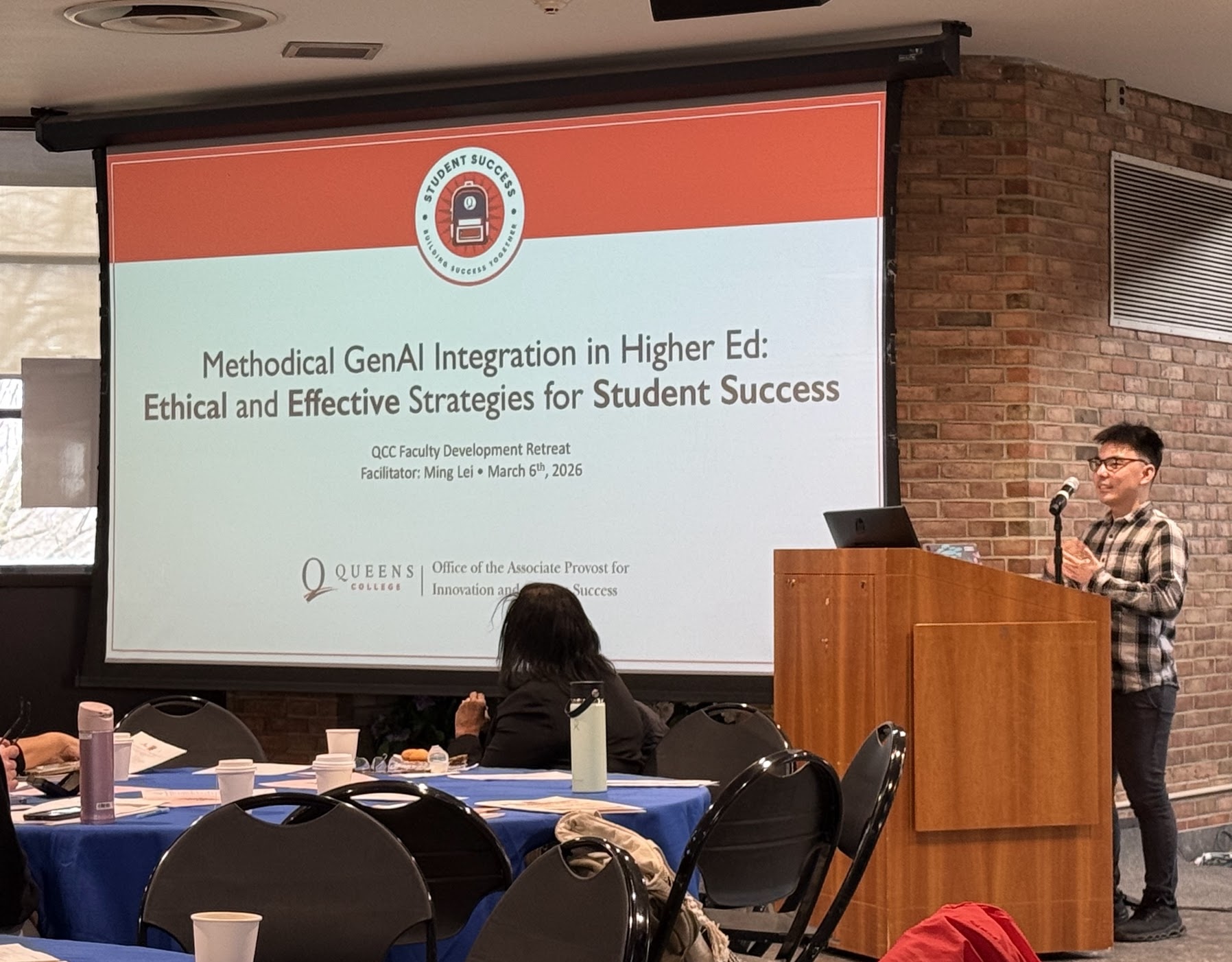
Invited by Queensborough Community College, Ming delivered an interactive workshop on Generative AI for
faculty and staff at the 2026 QCC Faculty Development Retreat, titled “Methodical GenAI Integration in
Higher Ed: Ethical and Effective Strategies for Student Success.”
Incorporating strategic insights and practical applications, Ming guided participants through the bias
and accessibility challenges of GenAI, while illustrating hands-on techniques for integrating GenAI into
teaching and administrative workflows. The session emphasized ethical considerations, data privacy,
institutional compliance, and the responsible use of AI tools in higher education.
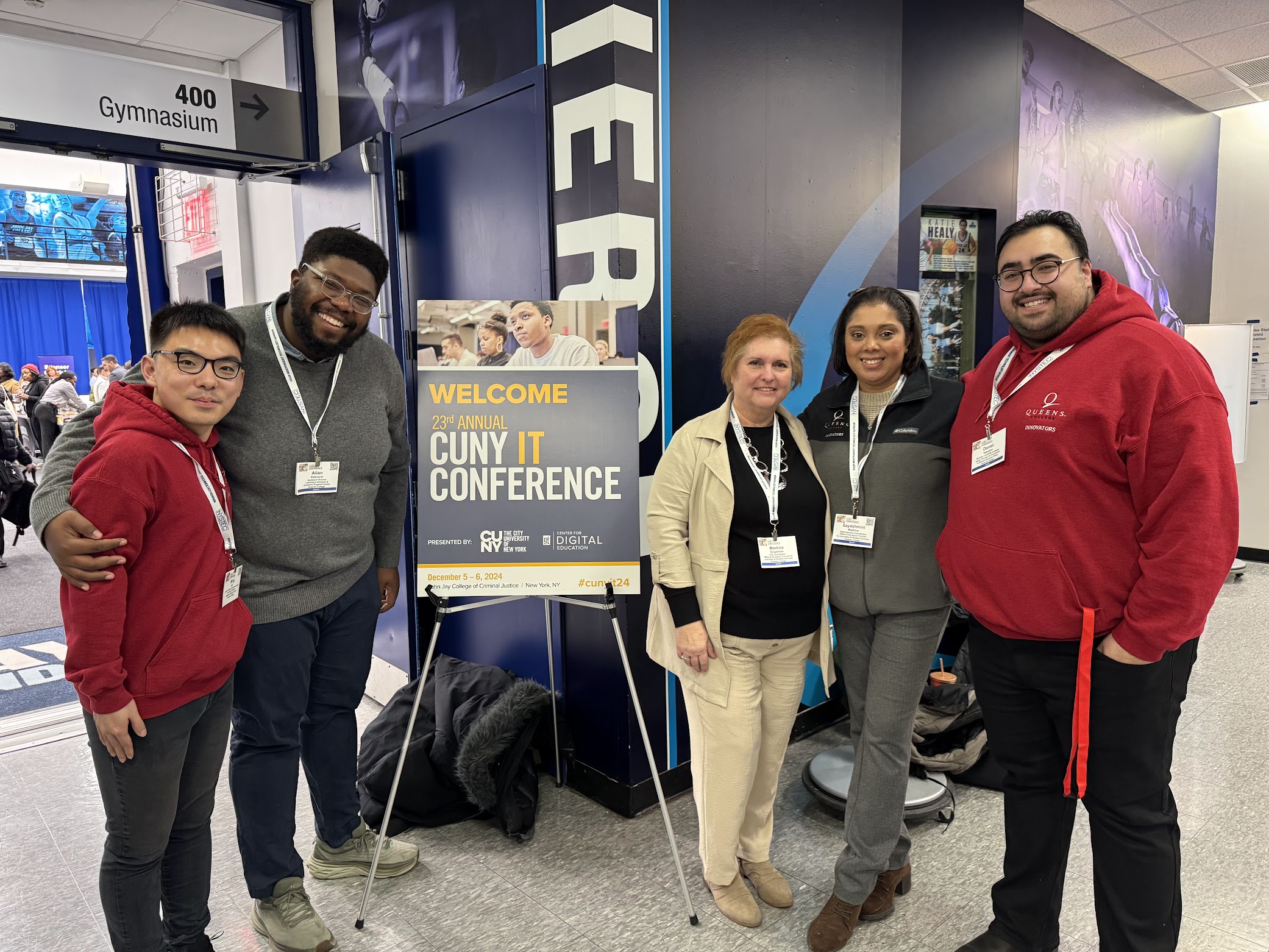
Ming and his Student Success team from Queens College delivered an engaging presentation at the 23rd Annual CUNY IT
Conference, titled “Leveraging CUNY’s Digital Toolbox to Drive Student Success.”
In this session, the team demonstrates innovative uses of digital tools to enhance collaboration, streamline
workflows, and make data-driven decisions. As the mastermind behind several campus-wide initiatives driven by
Microsoft Power Automate and Power Apps, Ming illustrated his creative yet practical custom-made solutions in
a real-world context that have significantly improved student enrollment and retention, while retaining
compliance with institutional policies.
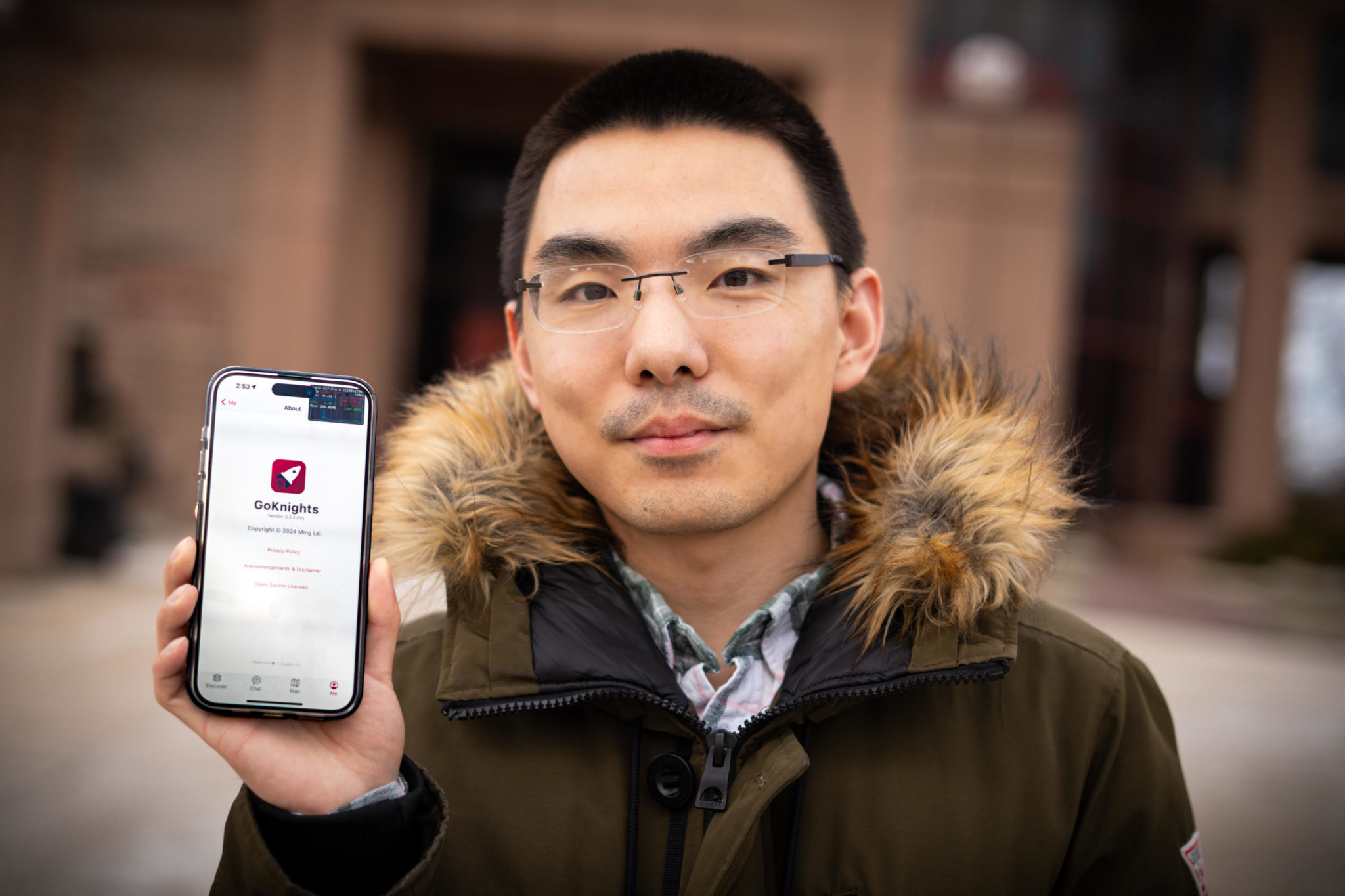
GoKnights is a community-driven mobile app designed for Queens College students, faculty, and prospective students.
The app serves as a centralized hub for essential campus information, including categories like advising, printing,
directory, and student life services. Developed by Ming Lei, a Computer Science graduate student, the app was
inspired by his experience as a new student orientation leader.
GoKnights offers an OpenAI GPT-4o AI-powered chatbot, multilingual support, and an open-source codebase focused on privacy and
collaboration. It allows users to book appointments, print documents, and easily access the QC calendar for
important dates.
Available for both Android and iOS, the app has become a helpful tool for the QC community, with 800+ overall downloads as of August 2024.
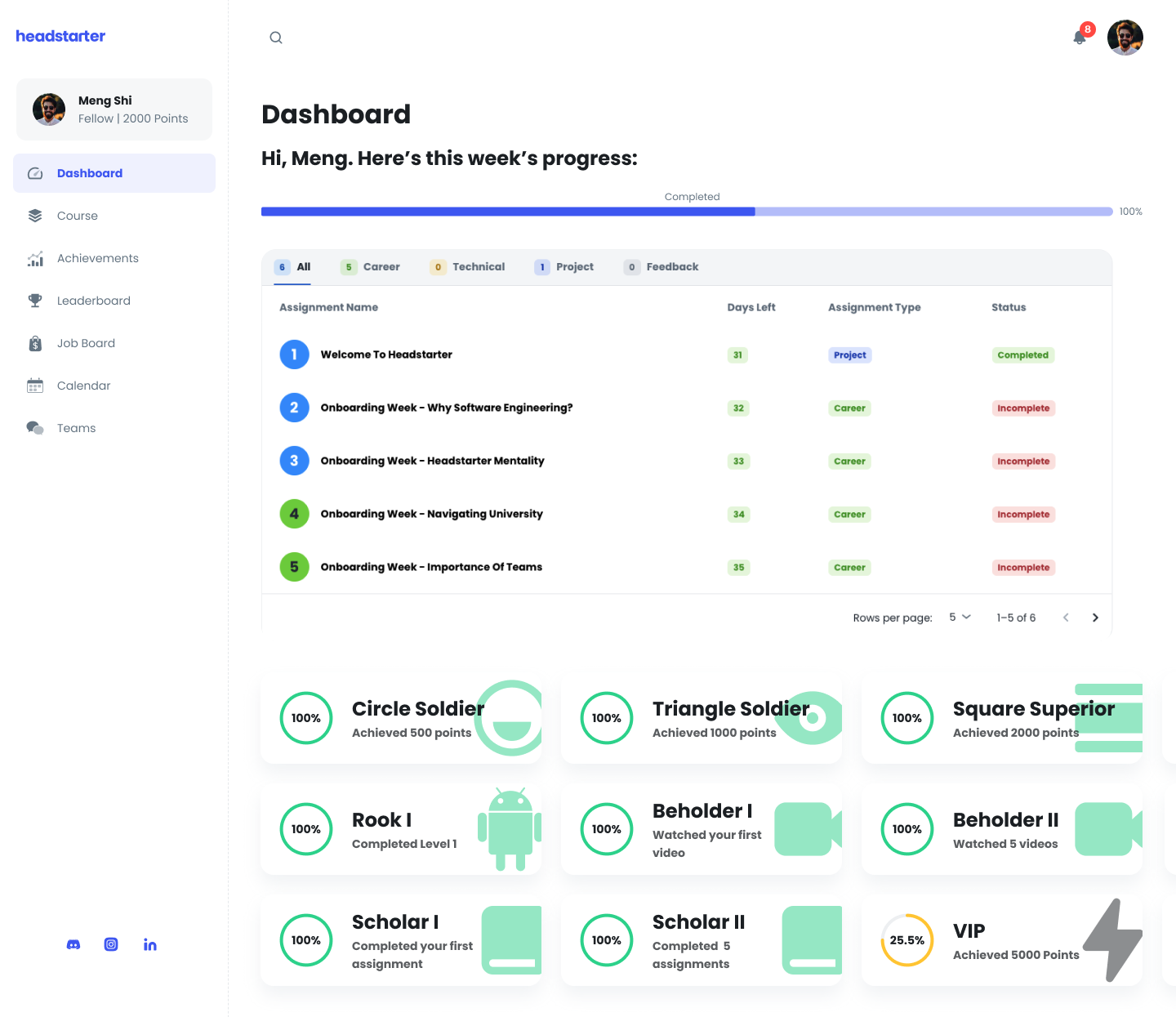
Headstarter App is a Next.js based web app that empower the startup's ambition
to help students boost their career success by "gamifying" SWE learning experience
and prompting personalized feedback. The app is built with a microservice
architecture utilizing various AWS products and is currently in development. I am
mainly responsible for creating frontend components using Material UI library, and
connecting to DynamoDB and Cognito using Lambda functions deployed on AWS CDK.
It has 350+ monthly active users and handles 1000+ requests per day.
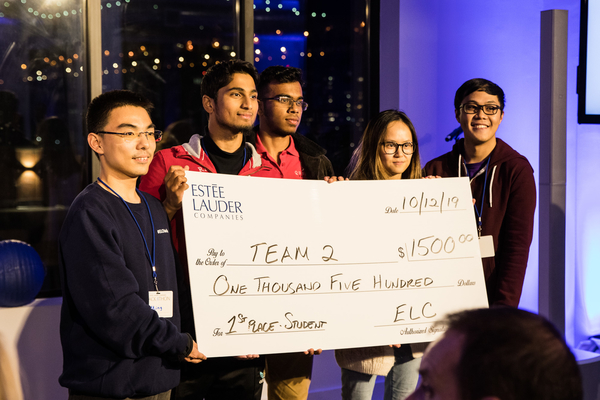
During the 2019 Estée Lauder Companies Hackathon, my team and I developed
an iOS and watchOS app utilizing product recycling and rewarding procedure,
enhancing customer experience across sub-company brands, while improving
corporate revenue and enabling buying pattern analysis. I particularly
created a machine learning model using Azure Machine Learning Studio
from Microsoft in order to provide accurate recommendation on related
products once recycling is completed. We were awarded the first place
among student hackers.
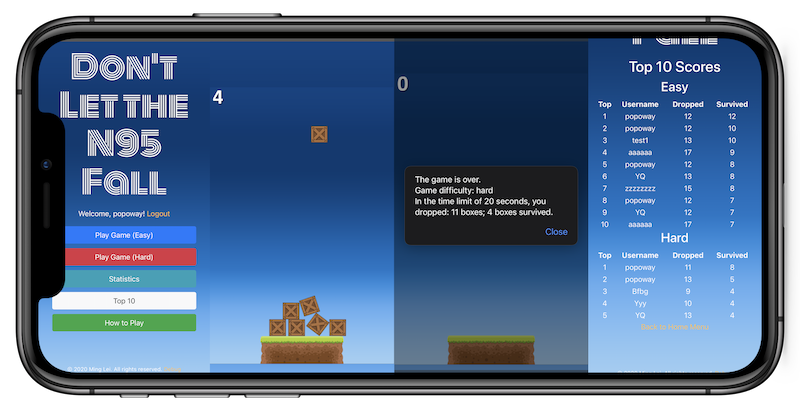
This is a class project I built in my software engineering class. It is
a fully functional HTML5 game powered by Phaser JavaScript framework,
along with PHP and SQLite as backend. The game can be played on both
desktop and mobile devices, and users may register an account to store
their game data and compete against each other. It has been awarded
a grade of A.
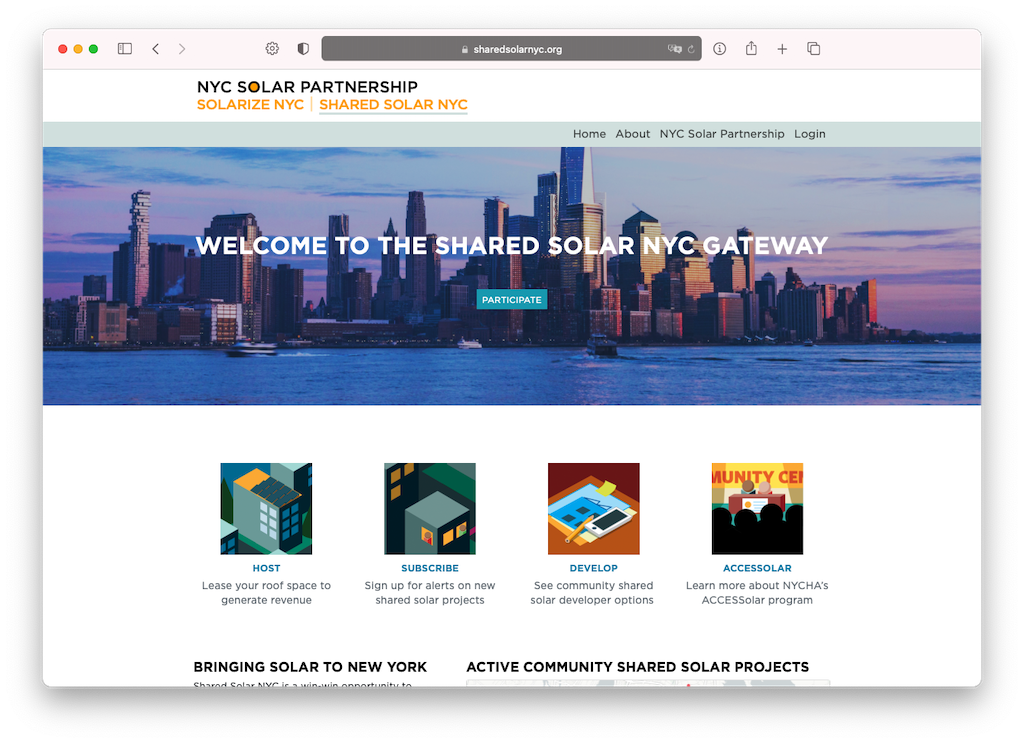
Shared Solar NYC Gateway is solar electricity initiative from Sustainable
CUNY, at which I am currently working since summer 2019. Powered by PHP
and MySQL, this application enables potential connection between interested
subscribers and solar developers. I helped build a user import and export
plugin in PHP, as well as a frontend form validation mechanism using jQuery.
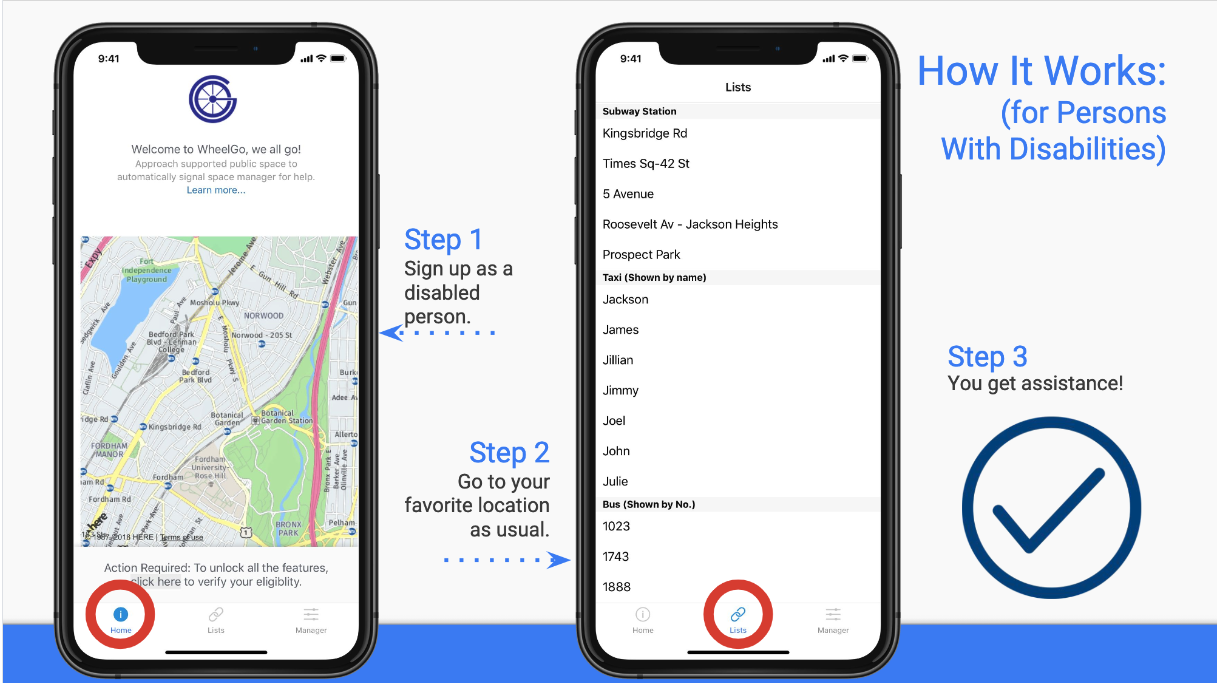
During the Lehman Hacks 2018 hackathon, my team and I built a universal
mobile app using React Native to create a LBS solution to provide assistance
for persons with disabilities. It automatically activates when users
approach a supported public space, whose space managers will then receive
a notification about their arrival for further help. We were awarded
"The Best Use of Map API" for this project.
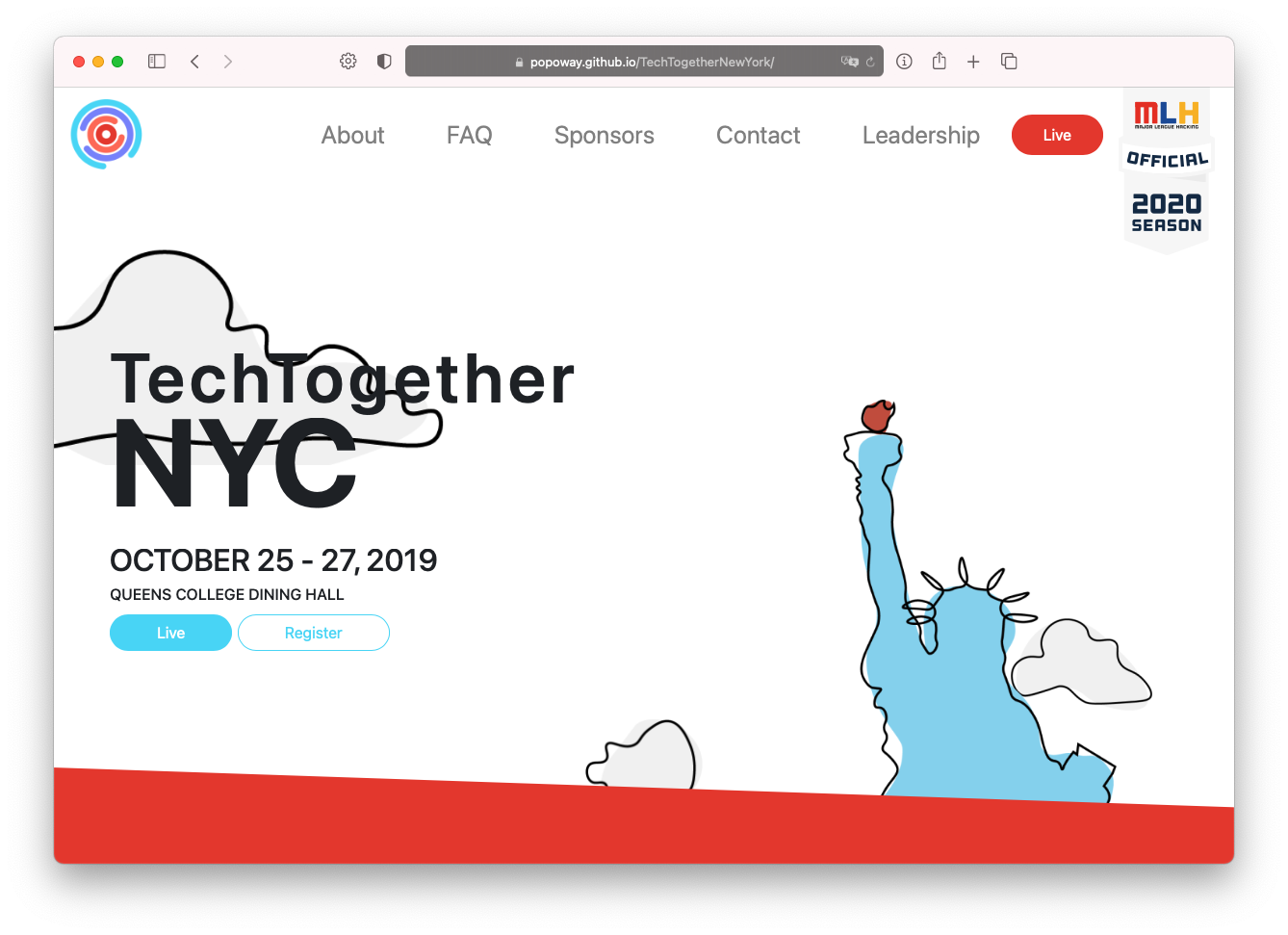
As the Co-Director of Technology at TechTogether New York 2019 hackathon,
I built this static website using HTML, CSS and JavaScript. Specifically,
CSS3 animation and transition are heavily used to optimize user experience.
Multiple libraries including BootStrap and animate.css are used to speed
up development. The website is rearranged to support different viewports
including mobile and tablet.